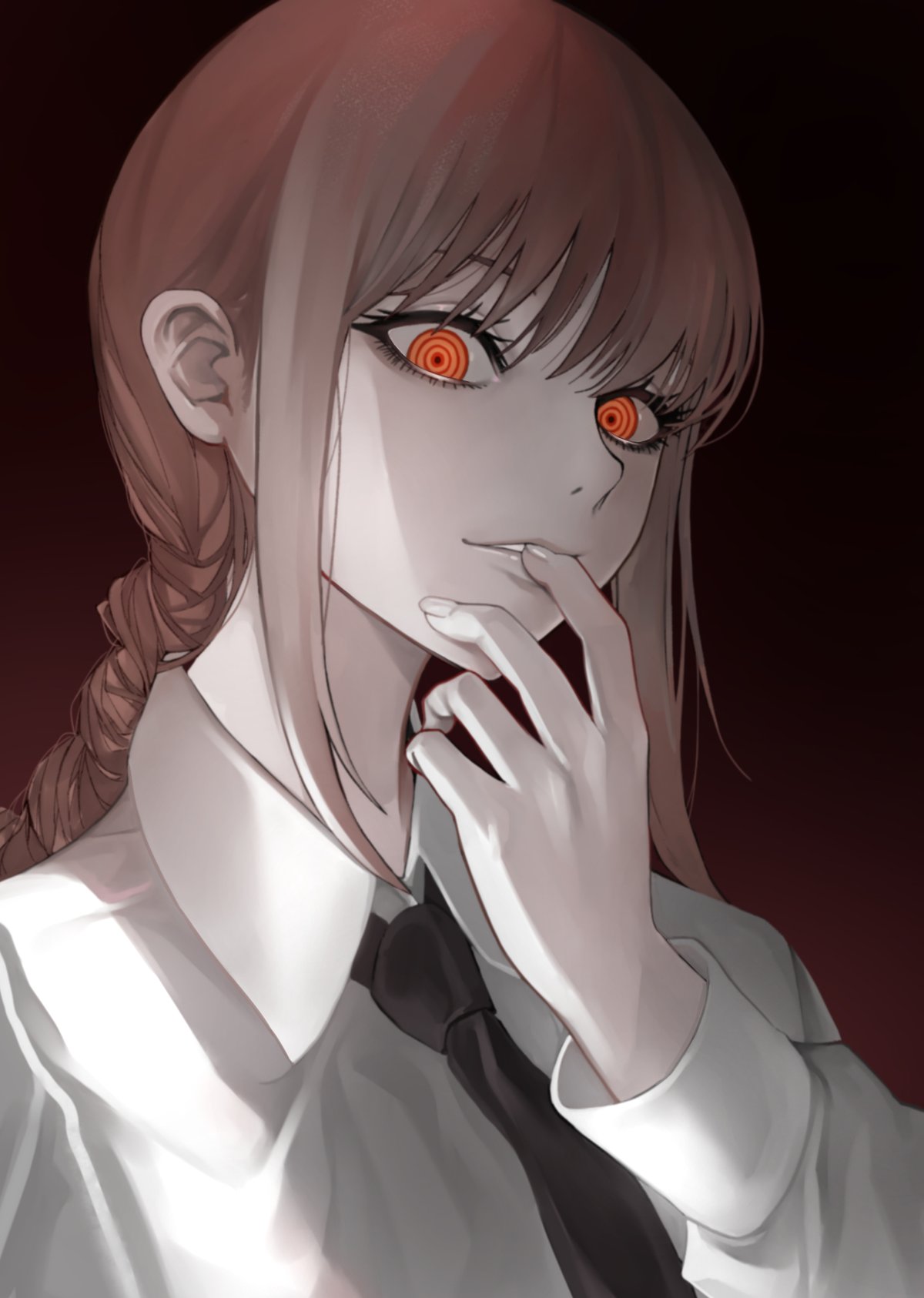
Let’s get straight to the heart of the matter: If you've landed here searching for "Makima in Vinland Saga explained," you've stumbled upon a fascinating, yet ultimately incorrect, crossover myth. Makima, the enigmatic and terrifying Public Safety Devil Hunter, is a central figure in Tatsuki Fujimoto's Chainsaw Man. She does not, and has never, appeared in Makoto Yukimura's masterful historical epic, Vinland Saga.
This isn't a simple oversight; it's a testament to the distinct brilliance of both series that fans might even dream of such a compelling, albeit impossible, fusion. The truth is, Vinland Saga stands firmly on its own, delivering a profound narrative rooted in historical realism, humanism, and a powerful message of peace, far removed from the supernatural horror of Chainsaw Man. So, let's clear up the confusion and dive into what makes Vinland Saga truly special, independent of any fictional crossovers.
Debunking the Crossover: Two Worlds Apart
The idea of Makima, with her formidable control abilities and chilling ambition, existing within the gritty, Viking-era world of Vinland Saga is certainly intriguing from a "what if" perspective. However, the fundamental premise of each series makes such a crossover structurally and thematically impossible. Chainsaw Man thrives on its chaotic, demon-infested modern world, psychological horror, and dark humor. Makima herself embodies themes of control, manipulation, and the darker aspects of power, directly contrasting with the core messages of Vinland Saga.
For those curious about her actual story, you can delve into to understand her complex character and impact within her own universe. But make no mistake, her world is not Thorfinn's.
The True Narrative of Vinland Saga: Peace, Purpose, and Humanity
Vinland Saga is celebrated precisely because of its commitment to a singular vision: the arduous journey from violence and revenge to peace and understanding. Thorfinn’s saga is one of the most compelling character arcs in modern manga, meticulously crafted over two decades. His transformation defines the series, moving from a child soldier fueled by hatred to a man who truly embodies the principle of non-violence.
Instead of supernatural entities or devil hunters, Vinland Saga presents us with . Each individual, from the pragmatic Leif Erikson to the wise Ylva, contributes to a rich tapestry of human experience, grappling with the brutal realities of their era. You can explore to understand how deeply rooted his development is in human struggle, not supernatural intervention.
Vinland Saga's Unwavering Thematic Core
Makoto Yukimura’s work is deeply philosophical, focusing on . The series expertly explores:
- The Cycle of Violence: How revenge perpetuates endless conflict.
- The Path to Forgiveness: The immense difficulty and ultimate liberation found in letting go of hatred.
- Building a Peaceful Future: The ongoing struggle and commitment required to create a world free from enemies.
This is a saga of humanity striving for something better, a testament to resilience and the pursuit of an ideal. It’s why resonates so powerfully with readers around the globe.
A Masterful Conclusion: Vinland Saga's Enduring Legacy
The beauty of Vinland Saga lies in its standalone brilliance, particularly exemplified by . After two decades, Makoto Yukimura delivered a rare, perfect conclusion that solidified its place as a seinen manga paragon. The series avoided common pitfalls, opting for quiet fulfillment and thematic resonance over shock value.
The intricate narrative, spanning various stages of Thorfinn's life, is detailed across . Each arc builds upon the last, culminating in the Thousand Year Voyage, a profound quest to establish a land of peace. The final Chapter 220, "Somewhere Not Here," was a brilliant culmination of these efforts, reinforcing the power of dialogue, forgiveness, hope, and collaboration. For a deep dive into the specifics, check out .
The series’ reliance on also further cements its unique identity, grounding its profound human themes in a believable, if brutal, historical context. This is a story about the true grit and evolution of humanity, not the whims of devils.
Appreciating Each Masterpiece on Its Own Terms
While the thought of Makima in Vinland Saga might spark interesting fan discussions, it's crucial to recognize and celebrate the distinct genius of both Chainsaw Man and Vinland Saga in their own right. Yukimura's masterpiece has concluded, leaving behind an indelible mark on readers worldwide, inspiring them to re-evaluate their own values and worldviews.
The spirit of Vinland Saga endures, a powerful testament to the idea that peace is not weakness, and kindness is the rarest and strongest form of human potential. To truly understand its profound impact and the legacy it leaves, explore . We encourage you to delve into the rich, authentic world of Vinland Saga and discover the powerful narrative that has captivated millions—a narrative that, definitively, contains no Makima.